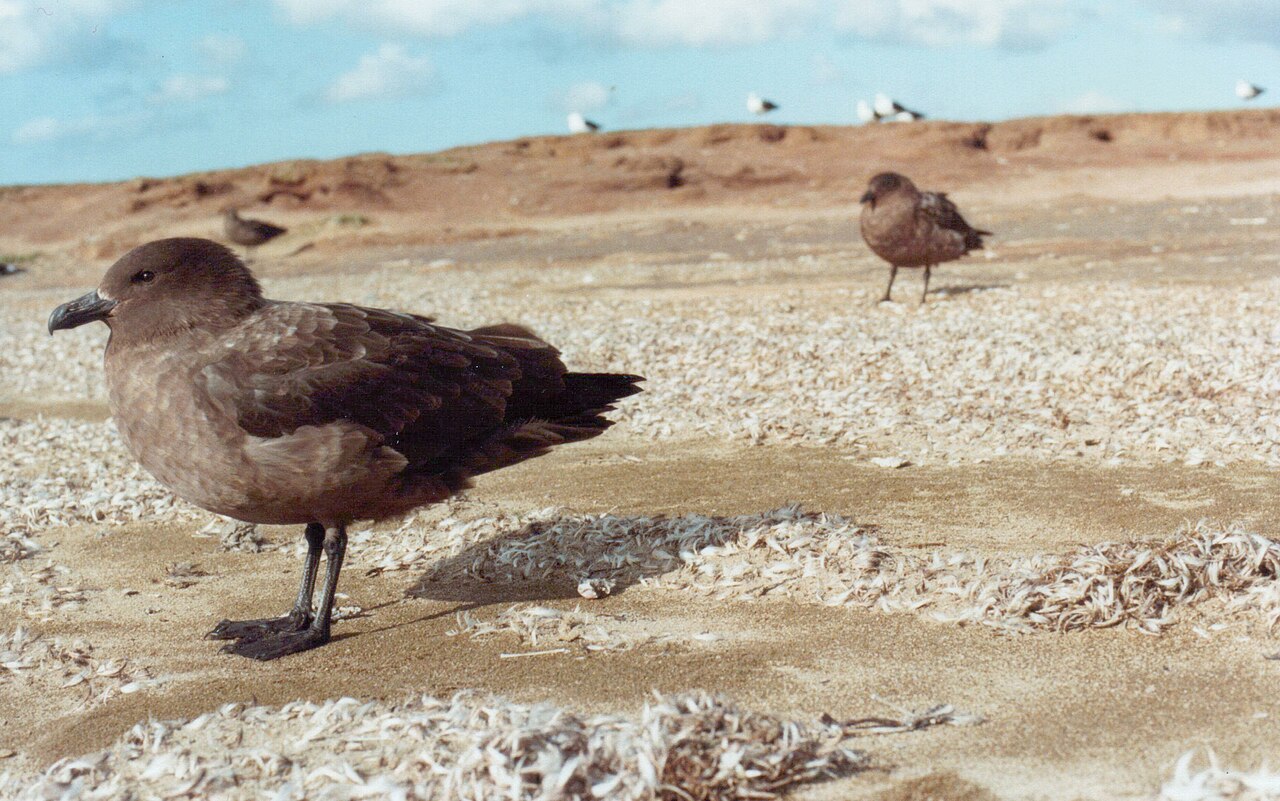
When H5N1 bird flu hits Australian wildlife, how can we protect our vulnerable species?
By Rachel McDonald, the Australian Science Media Centre
It's inevitable that the highly pathogenic H5N1 bird flu virus will eventually spread through Australian wildlife, according to Australian researchers, following the detection of the virus in migratory seabirds in WA and SA over the past week. H5N1 clade 2.3.4.4b has been spreading rapidly across the world since 2020, particularly in waterfowl, reaching Antarctica and eventually Australia's sub-Antarctic territory, Heard Island, in late 2025. The virus can affect a wide range of species at different levels of severity, including humans.
Professor Raina MacIntyre, Head of the Biosecurity Program at the Kirby Institute, told an AusSMC briefing that this particular clade "turned everything upside down globally."
"There's some unprecedented things that have happened in the last six years. It's spread to more than 500 wild bird species, and over 50 mammalian species. In the old days, before 2020, we always thought of this virus as spreading mainly through waterfowl, which is ducks, geese, and swans, but there's now many other birds and flyways through which it can spread," she said.
The virus has had large ramifications for farmed poultry overseas, with affected birds typically culled to prevent further spread. Professor MacIntyre said some areas had also begun trying to vaccinate poultry, however current vaccines are only partially effective and can mask the spread of the virus.
Dr Jane Younger from the Institute for Marine and Antarctic Studies at the University of Tasmania told the briefing that migratory birds are capable of contracting the virus and still travelling long distances, allowing it to spread long distances across the world.
She said in the sub-Antarctic areas she studies, marine mammals had been particularly hard hit.
"Everywhere that we've seen this virus be introduced, we are seeing big mortality, particularly in seals and fur seals, to the point that southern elephant seals have now had their conservation status changed," she said.
Despite the detection of H5N1 in two states, Dr Younger said it was important to understand that there was not yet an Australian outbreak, with the virus detected only in birds migrating from other areas and not in Australian wildlife or poultry.
However, experts at the briefing all agreed an Australian outbreak was inevitable.
Professor Hugh Possingham from the University of Queensland, BirdLife Australia and the Biodiversity Council Australia said it was highly unlikely that the seabirds that tested positive over the past week were the only birds on Australian shores affected by the virus.
"With the weight of migratory birds coming to this continent from other continents and other places, something's going to happen," he said.
Dr Younger said it will be difficult to predict where an outbreak might first occur.
"For a lot of these seabirds in the Southern Ocean that are really circulating this virus around, there hasn't been a lot of tracking done to know what the movements are, across different sexes and different populations, so it is a really tricky thing for us to model or predict how this will spread," she said.
Once it reaches Australian wildlife, Professor MacIntyre said we don't know much about how it's likely to affect different species here. She said Tasmanian devils were considered potentially at risk because they often feed on bird carcasses, and Australian cockatoo and galah species belonged to a group of birds that had been infected in other countries, so they would also likely be impacted.
Professor Possingham said with so much out of our control when it came to preventing the spread of this virus, the best thing to do to protect vulnerable species in Australia would be to focus on what we can control and double down on normal conservation actions.
I think the best thing we can do for our threatened wild birds...like the Western Hooded Plover, hooded plovers in general, threatened migratory parrots, Swift Parrot, is to basically improve all their other circumstances," he said.
"Don't destroy their habitat, don't disturb them, remove predators where possible, and all the other threats that are imposed on them."
He said developing vaccines for specific vulnerable species could be an option, especially for species such as the orange-bellied parrot, which has a total population of no more than about 150. While the parrots bred in captivity could be easily vaccinated if an appropriate vaccine was developed, he said vaccinating wild birds would be far more difficult.
Professor Possingham said people in the community could help by reporting sightings of birds that appear sick.
"People can look for the signs ... birds behaving strangely, seemingly uncoordinated, unusually tame," he said.
However, it is important to be careful around sick wildlife to avoid becoming infected or spreading the virus further.
"The most important thing is to avoid them. Don't go and harass them, don't pick them up, don't let your four year old granddaughter chase them or your dog," he said.
You can find out more about the AusSMC briefing here
You can read an AusSMC Expert Reaction on the bird flu here
This article originally appeared in Science Deadline, a weekly newsletter from the AusSMC. You are free to republish this story, in full, with appropriate credit.
Contact: Rachel McDonald
Phone: +61 8 7120 8666
Email: info@smc.org.au