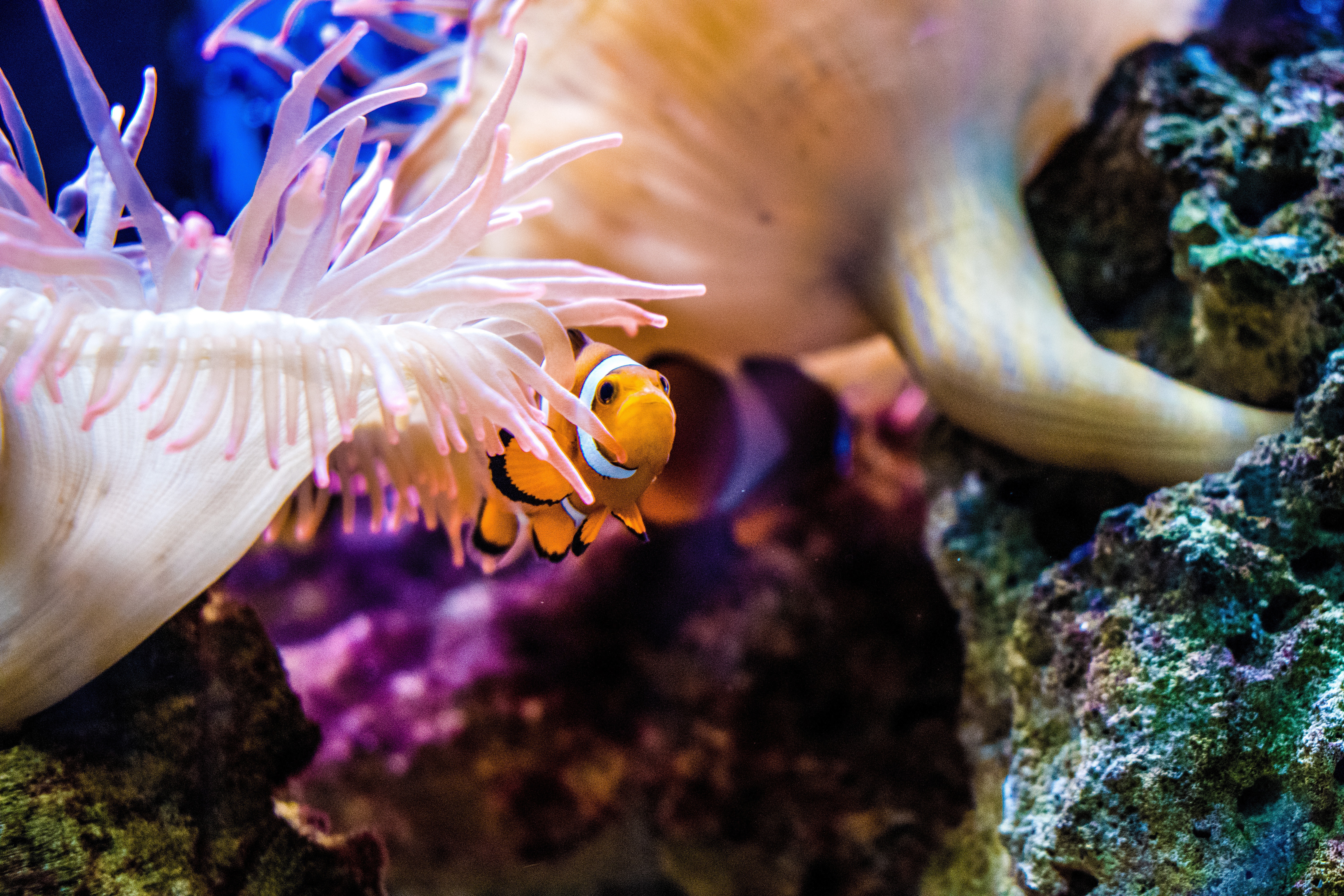
Great Barrier Reef remains resilient, but is entering ‘uncharted waters’
By Dr Joe Milton, the Australian Science Media Centre
The Great Barrier Reef is still in relatively good shape, but increasingly frequent heatwaves, bleaching and other disturbances have left it more volatile and with less time to recover, according to the latest annual survey from the Australian Institute of Marine Science (AIMS).
The report, launched at an AusSMC Briefing last week, found coral cover has increased across the northern and central Great Barrier Reef over the past year, but the southern reef suffered a decline.
AIMS Long-Term Monitoring Programme (LTMP) leader Dr Mike Emslie told journalists at the briefing that the amount of coral on the reef was currently “comparable or higher” than levels seen in previous decades.
But he said that didn’t tell the whole story.
“The Great Barrier Reef is continually under pressure from a raft of cumulative disturbances,” he said.
“We've seen repeated bleaching events over the last decade, in particular, and prior to the 1990s, we never saw these mass coral bleaching events that affected the whole of the reef.”
Since 2016, Dr Emslie said, the reef had experienced “a litany of bleaching events”, with mass bleaching now occurring roughly every two years.
The southern reef has been particularly hard hit.
Dr Daniela Ceccarelli, who leads the fish section of the LTMP at AIMS, said the south experienced “the highest level of heat stress ever recorded anywhere on the Great Barrier Reef” during the 2024 bleaching event.
It was then hit by Cyclone Alfred, followed by coral disease.
“So, we've had a sort of a cumulative impact of many different disturbances that those reefs have had to deal with,” she said.
The experts also said we’re seeing the beginning of what they believe is the fifth wave of crown-of-thorns starfish (COTS) outbreaks since the 1960s.
Dr Ceccarelli said the starfish were already a concern in the south, where there was a “persistent outbreak”.
“Yes, absolutely, we are worried about those reefs also getting impacted by COTS,” she said.
The reef’s coral communities are changing too, with branching and table corals being lost and replaced by smaller, less complex corals.
Dr Emslie said this matters because complex corals provide important habitat for fish and other reef creatures.
“You get higher diversity and higher numbers of [fish] when you have the higher complexity corals that are growing,” he said.
And while coral cover can still be high across large parts of the reef, Dr Emslie warned that the increasingly short gaps between disturbances are a major concern.
“The real worry here is just the frequency of these disturbance events,” he said.
Dr Ceccarelli was even more blunt about what the 40-year record is telling scientists.
“We are seeing an ecosystem that's increasingly volatile, and this is the sign of an ecosystem under stress,” she said.
“We're really in uncharted waters in terms of what we can predict the Great Barrier Reef will do in the next few years.”
So what can be done?
"The main and most important thing is to reduce greenhouse gas emissions because by far, and without a doubt, the most severe threat to reefs anywhere in the world, not just the Great Barrier Reef, is climate change," said Dr Ceccarelli.
And Dr Emslie said it's as important as ever not to give up on the reef.
“It is still a resilient system,” he said. “The reef can still fight back if we give it that chance.”
You can read about the AusSMC NEWS BRIEFING here
This article originally appeared in Science Deadline, a weekly newsletter from the AusSMC. You are free to republish this story, in full, with appropriate credit.
Contact: Dr Joe Milton
Phone: +61 8 7120 8666
Email: info@smc.org.au